
Reviews
What Manchester ecommerce brands should ask a content agency about scope, metrics and red flags
Manchester ecommerce guide to what to ask content strategy services about scope, revenue metrics and red flags before briefing an agency.
What to take away
- Ask any provider of content strategy services for named ecommerce results, a written scope and the exact metrics they will report before you brief them.
- MediaCityUK agencies suit broadcast, video and regulated fintech work; Northern Quarter agencies suit fast retail, fashion and DTC brands that need quick production.
- Content strategy services scope should name deliverables, owners, review cycles and the platforms covered, not just channel counts.
- Require Manchester ecommerce metrics tied to revenueorganic sessions to product pages, add-to-cart rate, conversion rate, revenue per session and return on content spend.
- Treat vague case studies, promised rankings and no named measurement standard as red flags in any Manchester agency pitch.
- Check the agency's company record at Companies House and its data practices against ICO guidance before signing.
What Manchester ecommerce brands should ask before briefing
Start with the commercial question: what will this content do to revenue per session? A Manchester ecommerce brand selling nationwide needs content that earns organic traffic and converts it, not content that only fills a blog. Ask the agency to show one ecommerce account where it can name the metric it moved and the period.
Ask who writes, who edits and who approves. In a city with a deep freelance pool, many agencies subcontract production. That is fine if the contract names the writers, the review process and the response times. Ask for the named account lead and how many other Manchester accounts that person handles.
Ask how the agency handles regulated claims. If you sell financial products, supplements, alcohol or cosmetics, the CAP Code and ASA rules shape what you can publish. A fintech client needs an agency that understands financial promotions rules from the FCA. A retail client needs one that can handle pricing claims, reviews and green claims under CMA guidance.
Ask what happens to the assets. Copyright, image licences and the right to reuse footage after the contract ends should be settled in writing. The IPO publishes guidance on copyright and IP that is worth reading before you sign anything.
Ask how the work will be measured. A serious agency will accept a measurement plan before the first invoice. Compare answers across three or four agencies using a structured selection checklist rather than judging the pitch deck.
MediaCityUK and Northern Quarter agency clusters explained
Manchester's agency market splits into two recognisable clusters, and each suits a different kind of ecommerce brief.
MediaCityUK vs Northern Quarter agencies
MediaCityUK
- Strength
- video, studio, brand
- Best for
- beauty devices, fitness
- Cost
- higher production costs
- Speed
- longer lead times
- Team
- in-house production
Northern Quarter
- Strength
- social, influencer, product
- Best for
- fashion, food, DTC
- Cost
- leaner teams
- Speed
- content within days
- Team
- freelancer reliance
MediaCityUK, at Salford Quays, grew around broadcast and production. Agencies there tend to be stronger on video, audio, studio production and brand campaigns. That suits ecommerce brands that sell through demonstration, such as beauty devices, home fitness and subscription boxes.
It also suits fintech clients that need compliant explainer content and polished video for paid social. Expect higher production costs and longer lead times.
Northern Quarter agencies sit closer to the city centre's retail and creative economy. They tend to be smaller, faster and more comfortable with always-on social, influencer work and rapid product content. That suits fashion, streetwear, food and DTC brands that launch products weekly and need content within days. Expect leaner teams and more reliance on freelancers.
The two clusters overlap. Some MediaCityUK agencies keep a Northern Quarter studio, and some Northern Quarter agencies buy production from Salford. What matters is the team assigned to your account, not the postcode.
Sizing the market helps you judge quotes. The ONS publishes UK business activity, size and location data, which shows how many small agencies operate and why a ten-person agency may be bidding against a two-person studio.
Official business services statistics, including advertising and market research, give a sense of sector turnover and growth.
Retail and fintech client needs in Greater Manchester
Retail and fintech client needs differ enough that one agency rarely serves both well. Ask which side of the line the agency sits on.
For retail, the pressure is seasonal and margin-led. Manchester ecommerce content has to support Black Friday, January sales and product drops without blowing the budget. The agency needs to plan content calendars around stock, not around editorial whims.
It also needs to handle user reviews and endorsements carefully, because the CMA has taken action on misleading online reviews and green claims.
For fintech, the pressure is regulatory. Financial promotions must be fair, clear and not misleading, and the FCA expects firms to approve them. An agency that writes fintech content without a compliance route creates risk for you.
Ask how the agency handles approval, disclaimers and record keeping. BS 10008, the British Standards Institution standard for digital records, is a useful reference for keeping auditable copies.
Both sectors share a data problem. Content that uses customer data, cookies or email marketing falls under UK GDPR and PECR, and the ICO publishes guidance on consent and marketing. Ask where data is stored, who can access it and how long it is kept.
If you export, the Department for Business and Trade provides market information and support that can shape content for overseas shoppers. That matters for Manchester brands selling into the EU, where returns and labelling rules differ.
Metrics Manchester ecommerce teams should require
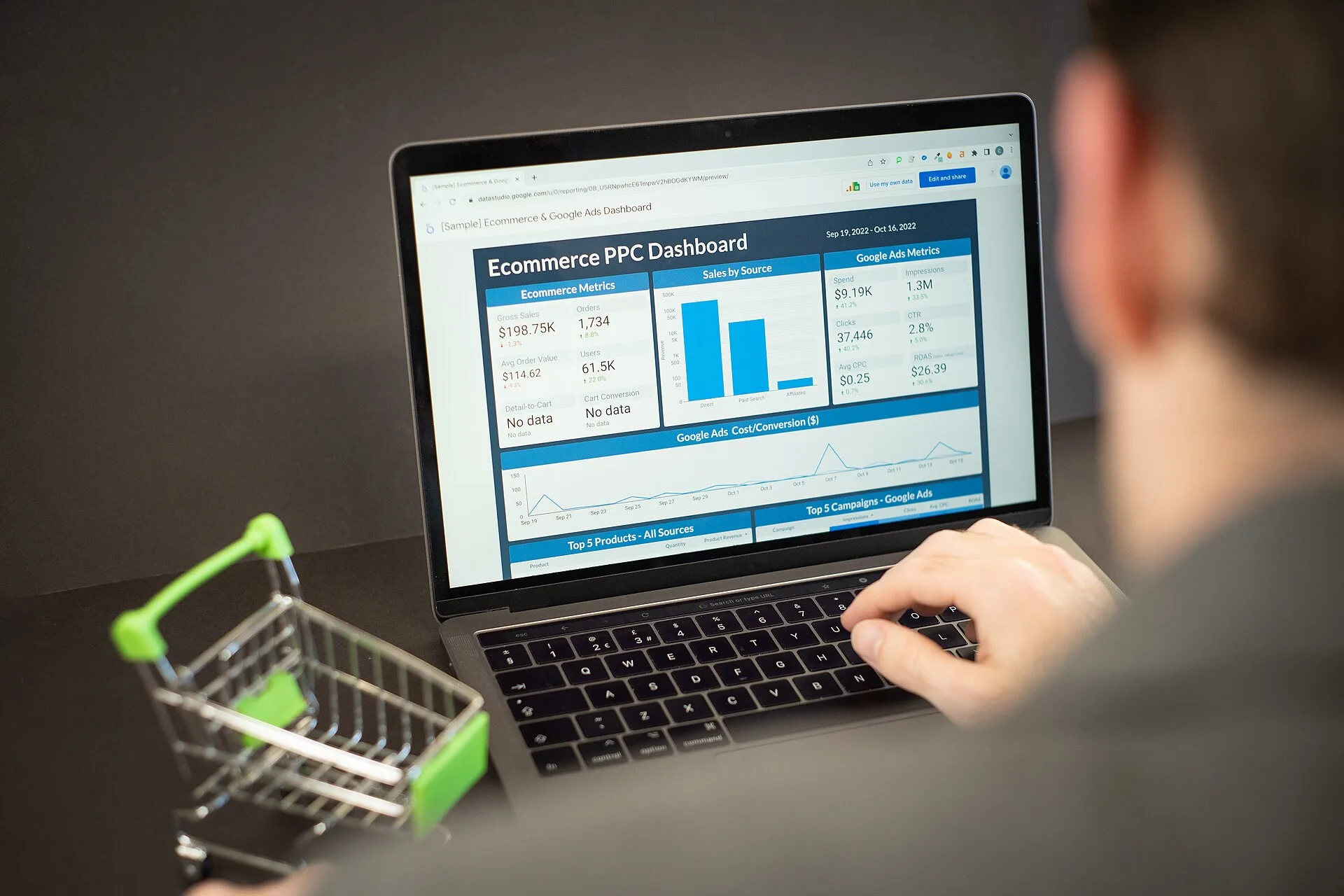
Require metrics that map to revenue, and require them in a dashboard you can open without asking. The checklist below sets out what to ask for and why.
Metrics to require from your agency
- Organic sessions to product pagesmonthly
- Add-to-cart rate from content landingsmonthly
- Conversion rate by content clustermonthly
- Revenue per sessionmonthly
- Assisted conversionsquarterly
- Return on content spendquarterly
- Branded search volumequarterly
Ask how the agency measures paid and organic together. UK digital advertising spend data and trends from IAB UK show how budgets shift between channels, which is useful when you challenge a plan that leans too hard on one platform.
Ask which measurement standards the agency follows. The IAB UK measurement hub sets out guidance and standards for digital advertising measurement, including viewability and verification.
Before you trust any metric, check where the number comes from. Attribution models flatter different channels, and last-click reporting understates content. Our guide to key metrics explains how to interrogate the data source before you accept a dashboard.
Build the reporting routine before the first campaign. A written measurement and reporting plan should name the tools, the attribution window, the owner and the review date.
Questions about content strategy services and scope
Content strategy services scope should be written, priced and tied to deliverables. Use these questions in the pitch.
Scope questions for the pitch
- Which deliverables, how many per month?
- Who owns strategy, writing, design, publishing?
- Which platforms and languages are covered?
- What is the review and approval cycle?
- What happens if we pause mid-quarter?
- Which tracking tools, and who pays?
- What training or handover at the end?
Ask how the agency prices the work. Retainers, project fees and performance-linked deals carry different risks, and our guide to pricing models sets out how to compare quotes on a like-for-like basis. Ask whether VAT is included, because HMRC rules apply to most agency invoices.
Ask how contractors are engaged, because IR35 rules can shift tax liability if the agency supplies people who look like employees.
Ask for a worked example. Take one product page and one blog post, and ask the agency to show the brief, the draft, the edits and the published result. That single exercise reveals more than any credentials deck.
Red flags in Manchester agency pitches
Most bad pitches fail on the same points. Watch for these.
Red flags in agency pitches
- Promised rankings or promised revenue
- Case studies with no numbers
- No measurement plan
- Compliance hand-waving
- Scope that changes in the contract
- No Companies House record
Promised rankings or promised revenue. No agency controls search algorithms or your stock levels. A promise is a warning sign, not a comfort.
Case studies with no numbers. If the agency cannot name the client, the period and the metric, treat the case study as decoration. Ask for a reference call with a client in your sector.
No measurement plan. If the pitch promises content but not reporting, you will not know whether it worked. Ask for the dashboard before you sign.
Compliance hand-waving. Fintech and regulated retail clients should hear specific answers about FCA approval routes, ASA rules and ICO guidance. Vague reassurance is not a process.
A scope that changes in the contract. Compare the pitch document with the statement of work. If deliverables shrink or exclusions grow, walk away or renegotiate.
No company record. Check the agency at Companies House for filing history, directors and any name changes. It takes minutes and prevents surprises.
One final check: ask who else in Manchester the agency works with. If it represents two direct competitors, ask how it will separate teams, data and ideas. A clear answer is fine. A shrug is not.
Common questions
What should a Manchester ecommerce brand ask first?
Ask what the content will do to revenue per session, and which client account proves it. Get the metric, the period and the client name before discussing channels.
Do MediaCityUK agencies cost more than Northern Quarter agencies?
Usually yes, because studio production, equipment and crew carry higher day rates. Northern Quarter agencies often suit fast retail content with tighter budgets and shorter lead times.
Which metrics should we require in the contract?
Organic sessions to product pages, add-to-cart rate, conversion rate by cluster, revenue per session, assisted conversions and return on content spend. Insist on a dashboard you can open yourself.
How do we check an agency before signing?
Read the company record at Companies House, ask for two reference calls in your sector, and confirm how the agency handles ICO consent rules and FCA approval routes if you are regulated.
What should make us walk away from a pitch?
Promised rankings, case studies without numbers, no measurement plan, and a contract whose scope is narrower than the pitch. Any one of these justifies a second look at other agencies.